Hand signals are used when your indicators are not working, cannot be seen clearly, or when extra clarity helps another road user understand your intention. They are required knowledge for the Irish driving test. Everything below follows the Rules of the Road, Section 7, pages 111–113.
All three signals are given with the right arm out of the driver's window. Make the signal clearly and hold it long enough for other road users to see and react. These are the three signals shown in the Rules of the Road, page 112 — there are no others for traffic behind you.
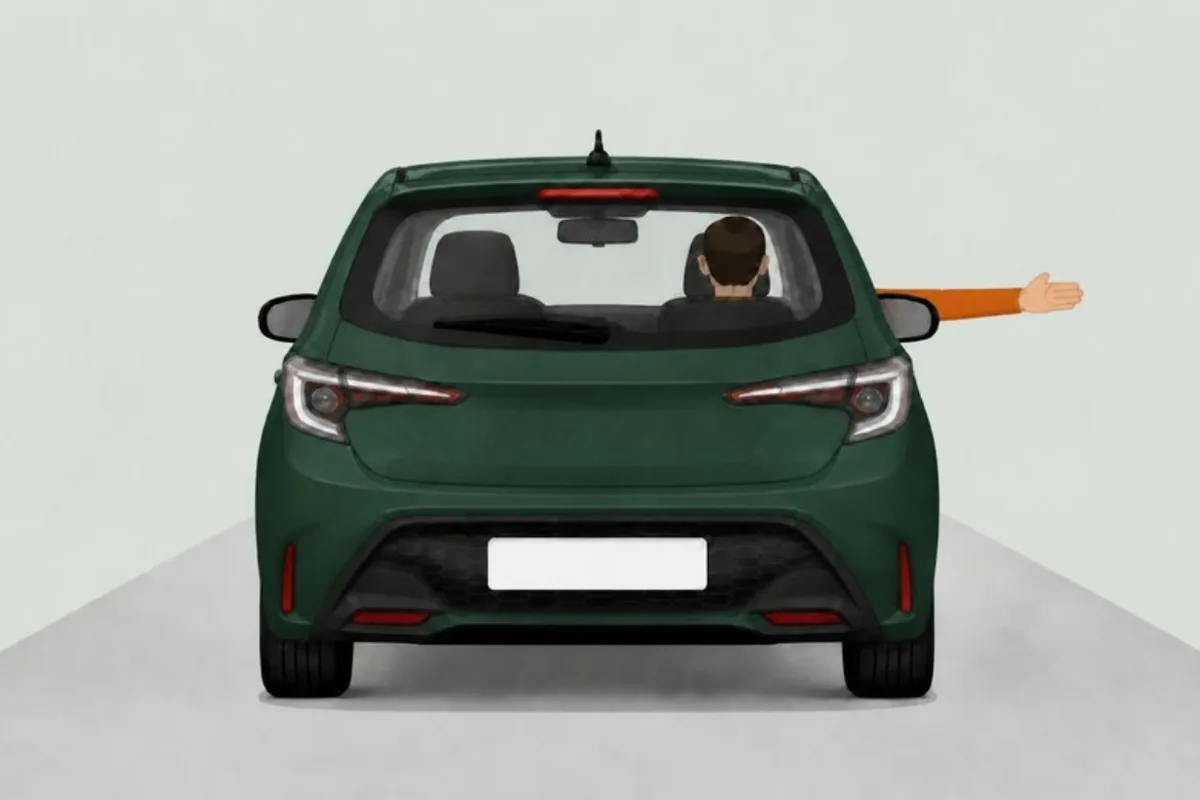
I am going to move out or turn to my right
Extend your right arm straight out of the window and hold it steady. This signals your intention to move out from the kerb, change lane to the right, or turn right at a junction. (Rules of the Road 2026, p. 112)
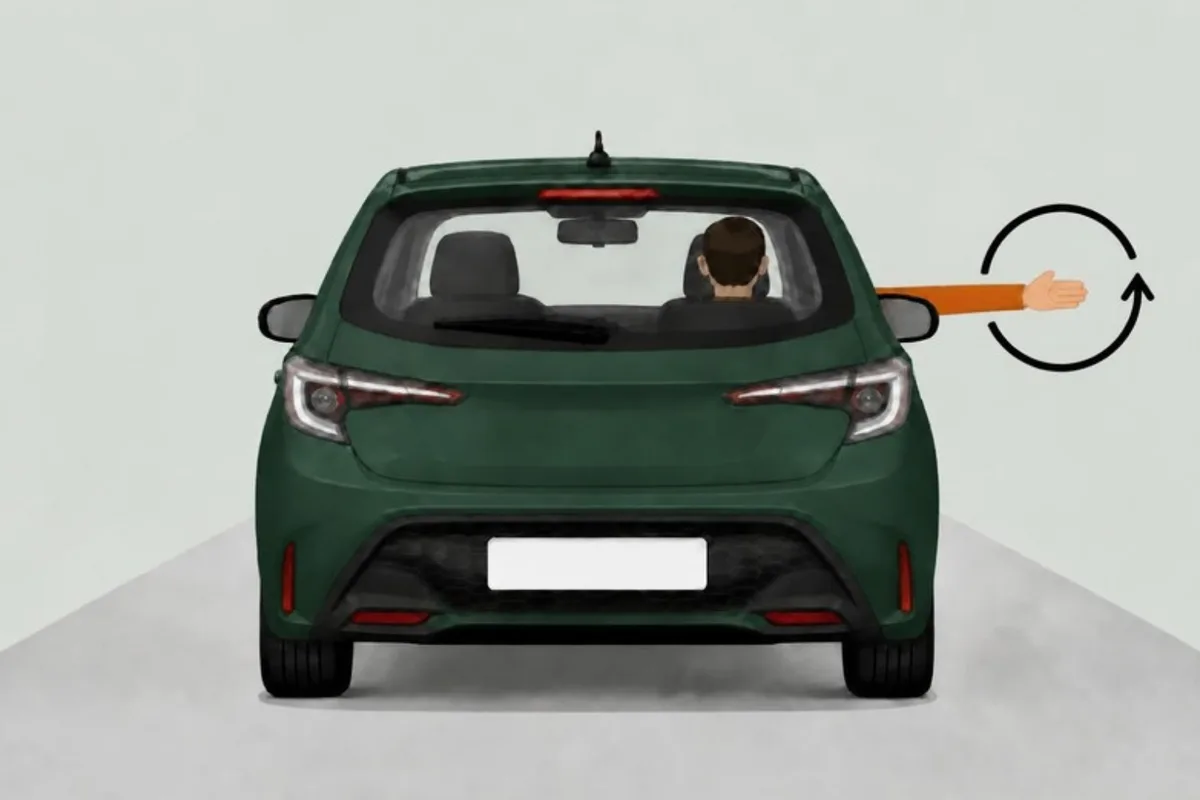
I am going to turn to my left
Extend your right arm out of the window and move your arm and hand in an anticlockwise circular direction. A cyclist gives this signal by extending the left arm instead. Use your left indicator wherever possible. (Rules of the Road 2026, p. 112)
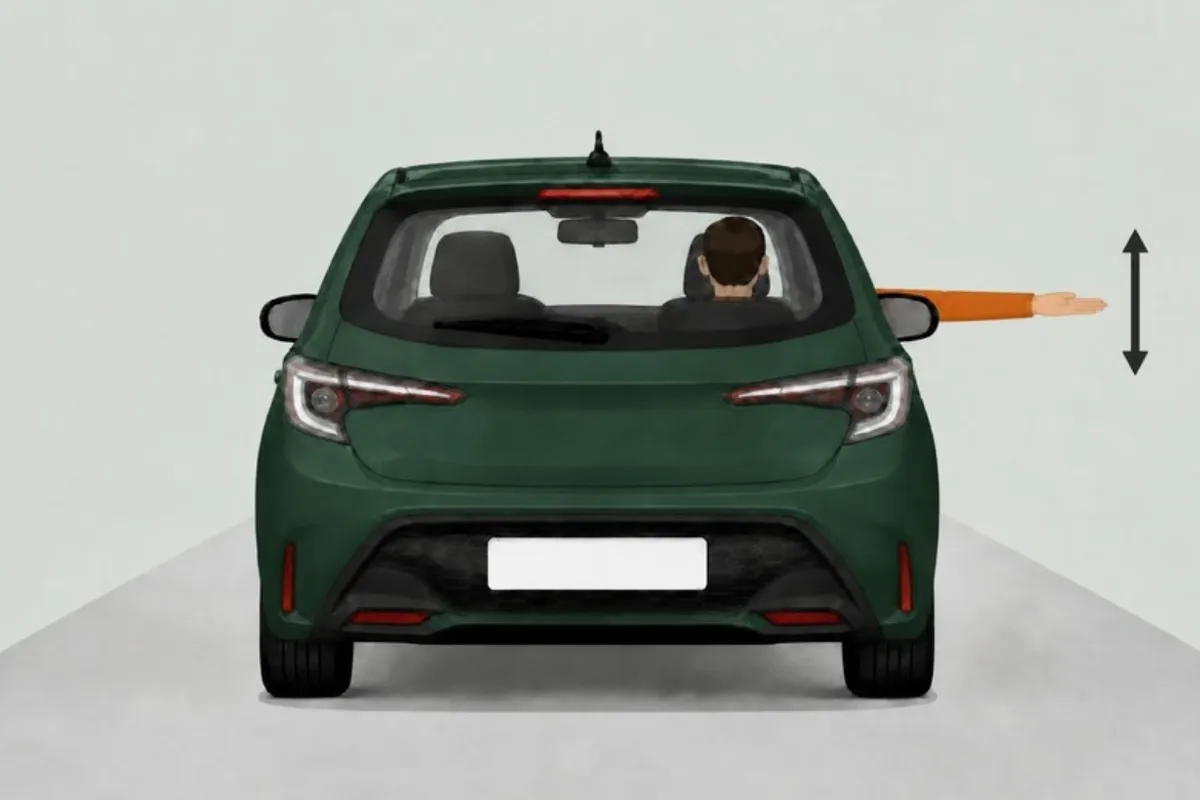
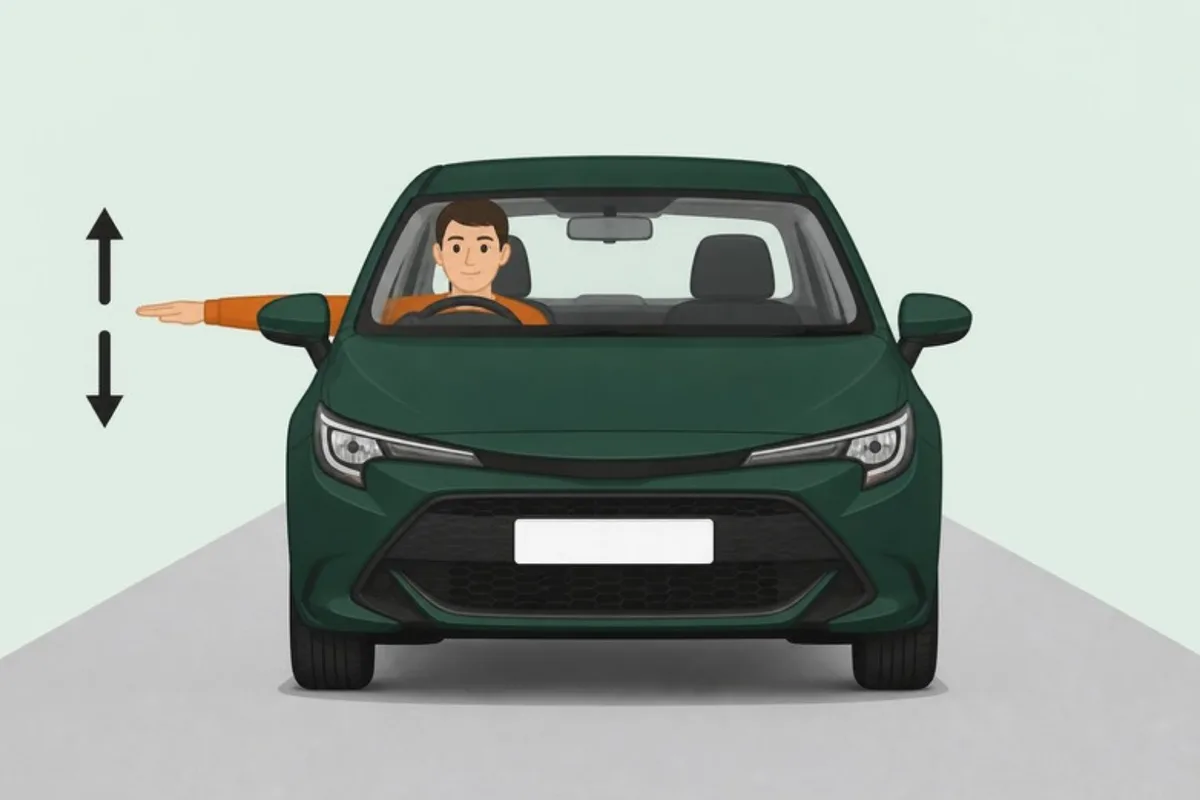
I am going to slow down or stop
Extend your right arm out of the window with your palm facing downward and move it slowly up and down. Use this when your brake lights cannot be seen clearly or might not be working — and have them repaired as soon as possible. (Rules of the Road 2026, p. 112)
For a pointsman and oncoming traffic
Signals to traffic in front of you
The Rules of the Road (page 113) gives a second set of signals for a pointsman — a Garda controlling the flow of traffic — and for oncoming drivers who need to see your intention. There are four of them. Instructors ask about these on lessons and mock tests, so learn both sets.
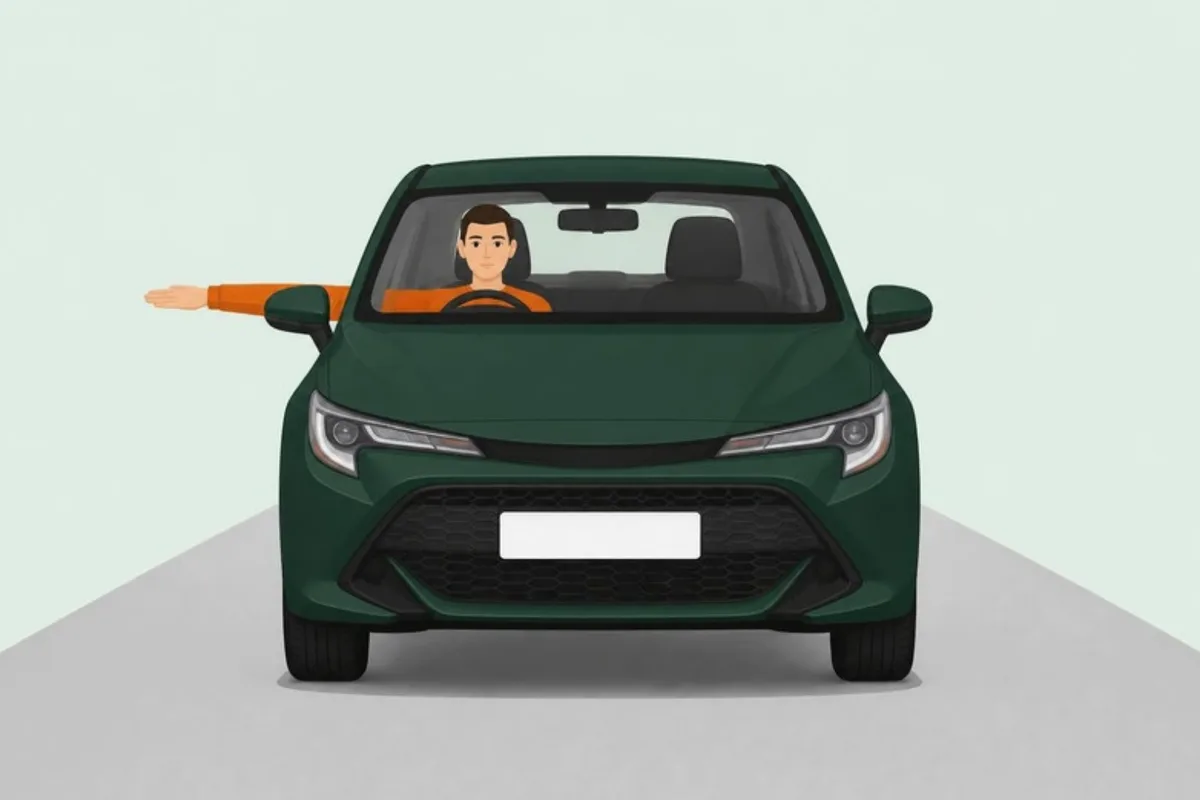
I want to turn right
Extend your right arm straight out of the window and hold it steady, where the person in front can see it clearly. (Rules of the Road 2026, p. 113)
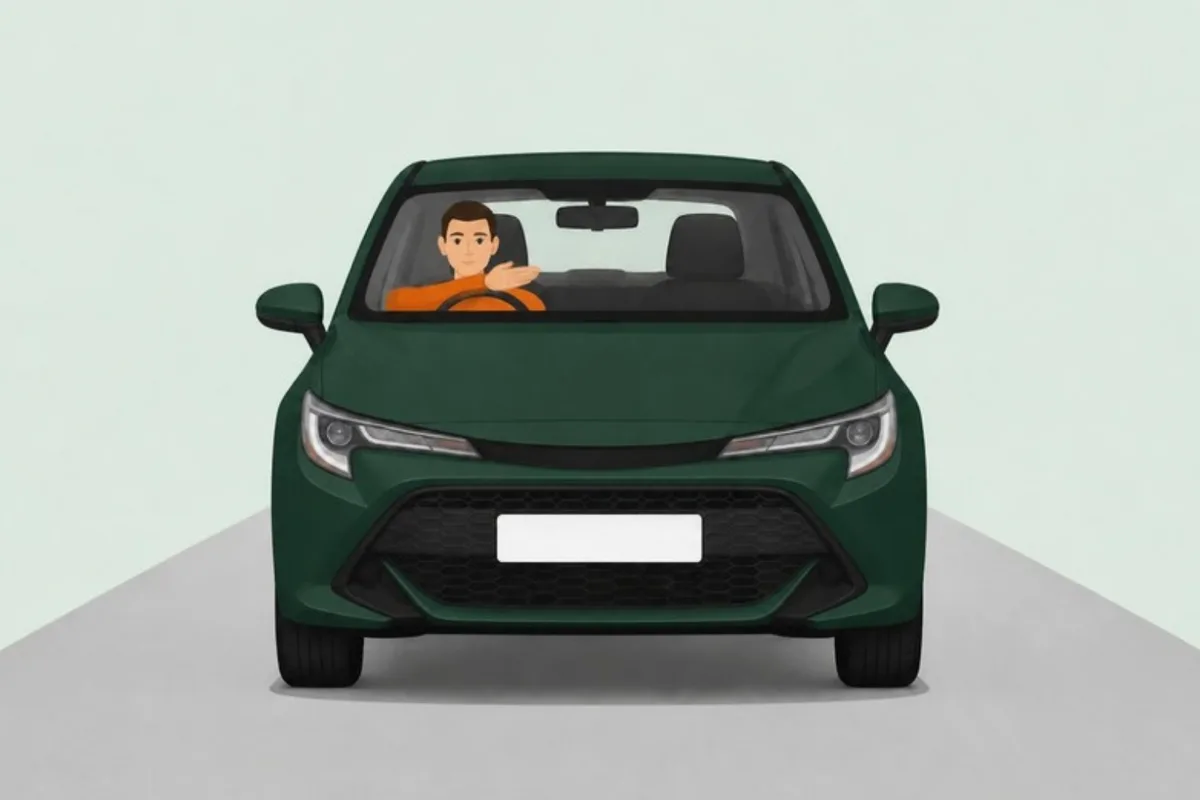
I want to turn left
Bend your right arm at the elbow and point your right forearm and hand across your body to the left with your fingers extended, so your direction is obvious from the front. The Rules of the Road notes this fingers-extended detail for car drivers. (Rules of the Road 2026, p. 113)
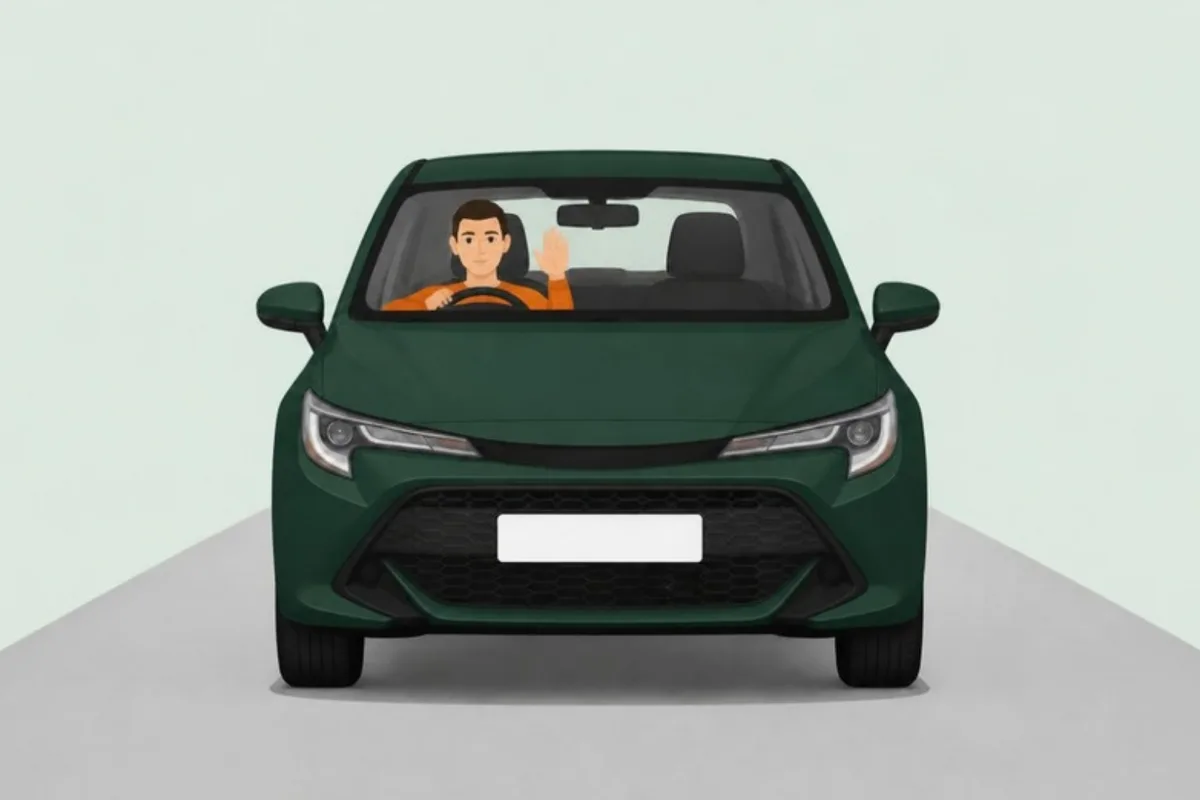
I want to go straight on
Keep your right hand on the wheel and raise your left hand, palm facing forward, so it is visible through the windscreen to the person directing traffic. (Rules of the Road 2026, p. 113)
I want to slow or stop
Extend your right arm out of the window and move it up and down, so a pointsman you are approaching, or oncoming traffic, can see you are slowing down or stopping. (Rules of the Road 2026, p. 113)
The signals shown for the cyclist apply equally to an e-scooter user, an e-moped (L1e-A) rider, a motorcyclist and a person in charge of a horse-drawn vehicle, as well as to drivers of agricultural machinery not fitted with indicators.
When to use hand signals
Signals support. They don't replace.
Hand signals supplement your indicators, they do not replace them. Use a hand signal where it helps rather than confuses. The Rules of the Road (page 111) gives these examples:
Turning right just after changing position to pass stationary traffic on the left
Telling oncoming traffic that you intend to give way at a pedestrian crossing
Where another road user may not be able to see your flashing indicators
Where you believe your indicators are not working — have them repaired before continuing your journey
Where you think your brake lights might not be seen or might not be working (page 59)
On the driving test, the examiner may ask you to demonstrate a hand signal
RememberA signal only shows what you intend to do — it never gives you right of way, and an indicator is not a right of way either.
CheckMirrors before giving any signal
SignalClearly and in good time
HoldLong enough to be seen
ProceedOnly when safe to do so
Signals from others
Signals given to you by other road users
Not all hand signals come from drivers. The Rules of the Road (page 168) shows five Garda signals, and you must know them. If a Garda is controlling traffic, their signals override the traffic lights — if they signal you to stop you must stop, even on a green light.
GO
To beckon on traffic approaching from the front
The Garda faces you with the right arm raised and the elbow bent, beckoning with the hand. You may move forward.
GO
To beckon on traffic approaching from either side
The Garda stands side-on to you with the arm raised and bent, beckoning traffic across from the left or right.
STOP
To halt traffic approaching from the front
The Garda faces you with the right arm raised straight up, palm toward you. Come to a complete halt and wait to be directed on.
STOP
To halt traffic approaching from behind
The Garda has their back to the oncoming traffic with the right arm extended straight out to the side. Traffic coming up behind the Garda must stop.
STOP
To halt traffic approaching from the front and behind
The Garda raises one arm straight up and extends the other straight out to the side, halting traffic from both directions at once.
Continue studying
Signals covered. Keep going.
Review road signs, rules of the road or driving theory, or book a lesson to practise everything on the road.